
We are organizing an EURASIPAC workshop in Wellington on February 18th at the Royal Society of New Zealand. We assembled an interesting program with acknowledged speakers, including the ambassador of Germany and Spain. The focus of the workshop is the collaboration between NZ and EU in the area of ICT. The full program is available at:
Category: Event
New Position at Canterbury University
I started my new position at the Canterbury University in the HIT Lab NZ. I updated my contact details. I am looking forward to contribute to this great research institute.
Lego Creativity Table
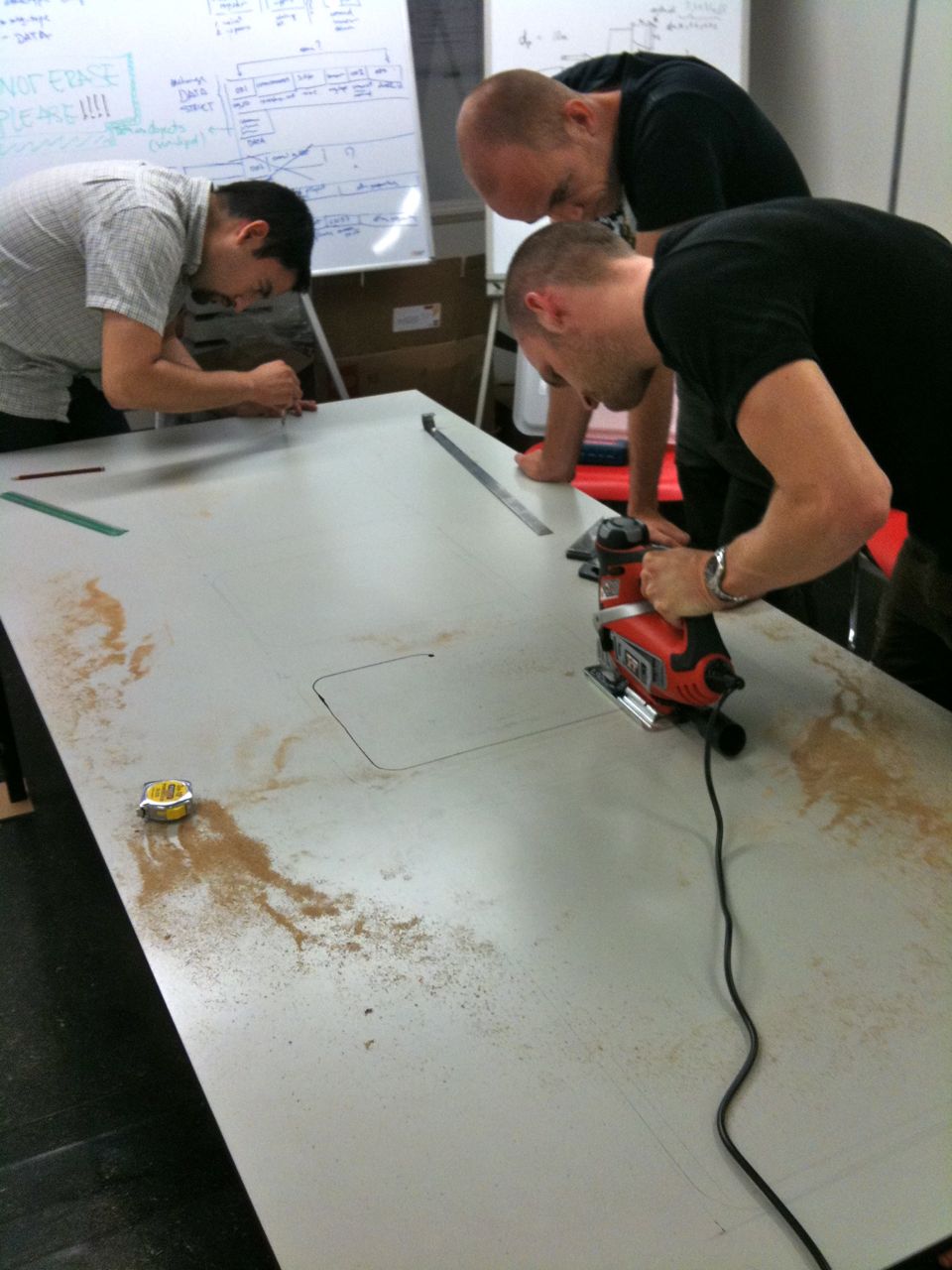
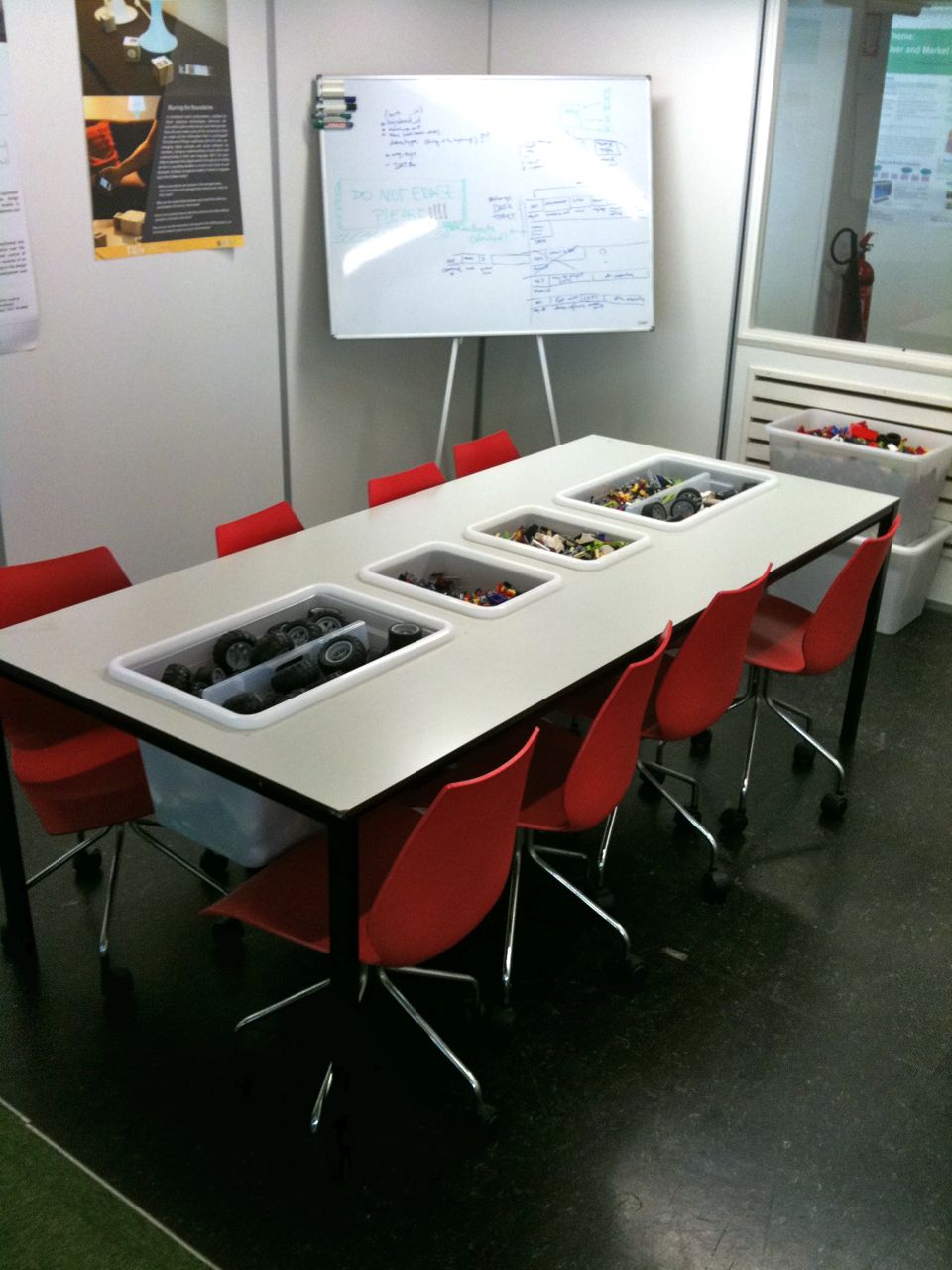
Creating a creative atmosphere for meetings is difficult. We already spend too much time in endless discussions. We build an affordable creativity table that helps a team to maintain their creative energy during a meeting. We integrated four boxes into a table and filled them with Lego. Bram, Alex and Gerrit made it possible!
Notes on Design and Science
The ICT&S Center at the Salzburg University kindly invited me to present my thoughts on Design and Science. Professor Manfred Tscheligi and Dr Astrid Weiss organized this inspiring evening in the picturesque old city center of Salzburg. Please enjoy this video recording of the presentation. You can link to the video through its DOI: 10.4016/17749.01. A report on this event is available at the ICT&S Center’s website.
Honorable Paper at CHI2010
Our paper entitled “Expressive robots in education – Varying the degree of social supportive behavior of a robotic tutor” received an honorable mentioning from SIGCHI at the CHI2010 conference. This means that our paper has been within the top 5 percent of all full papers. Here is the abstract:
Teaching is inherently a social interaction between teacher and student. Despite this knowledge, many educational tools, such as vocabulary training programs, still model the interaction in a tutoring scenario as unidirectional knowledge transfer rather than a social dialog. Therefore, ongoing research aims to develop virtual agents as more appropriate media in education. Virtual agents can induce the perception of a life-like social interaction partner that communicates through natural modalities such as speech, gestures and emotional expressions. This effect can be additionally enhanced with a physical robotic embodiment. This paper presents the development of social supportive behaviors for a robotic tutor to be used in a language learning application. The effect of these behaviors on the learning performance of students was evaluated. The results support that employing social supportive behavior increases learning efficiency of students.
Reference:
Saerbeck, M., & Bartneck, C. (2010). Expressive robots in education – Varying the degree of social supportive behavior of a robotic tutor. Proceedings of the 28th ACM Conference on Human Factors in Computing Systems (CHI2010), Atlanta. | DOI: 10.1145/1753326.1753567